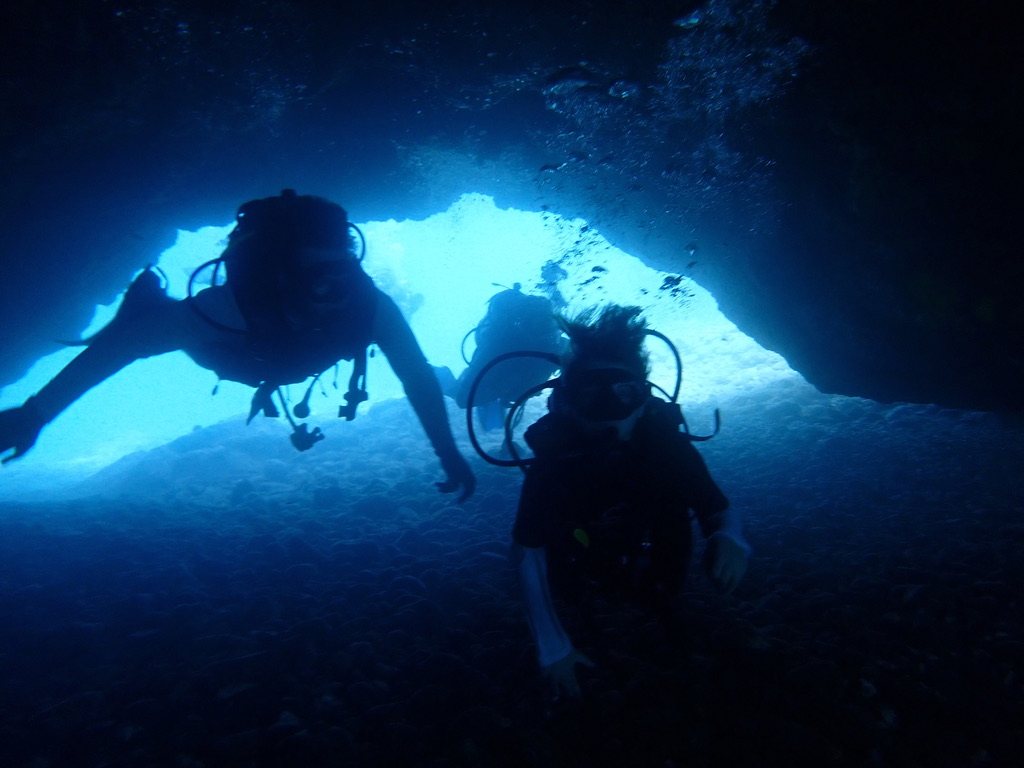
Do it yourself
Shore diving, site by site
Mala Wharf (10 minutes) — the famous one
When Hurricane Iniki collapsed the old Mala pier in 1992, its slabs and pilings became a coral-covered artificial reef at 25–35 feet — now a turtle cleaning station where dozens of honu cycle through daily and whitetip reef sharks rest under the slabs on most dives. Enter on the south side of the old pier over about 50 yards of shallow rock — booties mandatory, go at high tide — or use the boat-ramp entry staying well clear of traffic. Superb at night. Give resting sharks ten feet and never block their way out.
Black Rock (5 minutes)
Easy sandy walk-in beside the Sheraton to 15–32 feet. The inner face is beginner-friendly; the current strengthens as you round the point — if it catches you, ride it around rather than fighting back. Crowded with snorkelers and cliff jumpers by day; it truly shines as a night dive (Spanish dancers, hunting eels, sleeping turtles).
Kahekili / Airport Beach (steps away)
Your local: gentle sandy entry to a long, shallow reef at 15–40 feet — the classic first-dive-after-certification site and the place to shake down rental gear. Inside the Kahekili Herbivore Fisheries Management Area: no fish feeding, no taking of herbivores. Honolua Bay adds a summer-only option twenty minutes north (long rocky walk-in; many prefer it by boat).
Gear: Aloha Maui Diving in Lahaina is the DIY hub — tanks $10 a day (nitrox $20), full kit $70, and the dive flag ($10) Hawaiʻi law requires (stay within 50 feet of it). Certification card required. Forum wisdom, labeled as such: ScubaBoard's Maui regulars suggest a guide for your first Mala dive, recommend the local “Maui Mantas” meetup group for visiting solo divers needing a buddy, and repeat the golden rules — dive before 10 a.m., don't leave valuables in the car, and treat any south or west swell as a shore-dive cancellation.