The Hāna Highway is less about the destination than the journey: a slow, spectacular ribbon of road hugging Maui's northeast coast past dozens of waterfalls, black-sand beaches, and jungle overlooks. The secret is quality over quantity — pick three to five stops rather than trying to hit everything, or you'll spend the day exhausted in the car. From Kāʻanapali it's a full, early day.
From Kāʻanapali, start early. It's about 1.5 hours just to reach Pāʻia, where the highway begins. Leave Mahana by 6:30–7:00 a.m., fill up on gas in Pāʻia (the last reliable fuel for hours), grab breakfast and snacks, and download an offline map — cell service disappears. The full loop back is a 10–12 hour day.
Breakfast, surf & turtles
Before MM 1Pāʻia & Hoʻokipa
Fuel up and caffeinate in the funky surf town of Pāʻia, then pull off at Hoʻokipa Beach Park to watch world-class windsurfers and, most afternoons, green sea turtles hauled out on the sand. A great warm-up before the curves begin.
The classic first waterfall
MM 2Twin Falls
The traditional first stop — an easy walk to swimmable falls that gives you an early rainforest payoff without a big time commitment. It gets busy; arrive early and it's magic. There's often a fruit and smoothie stand at the entrance.
Lava coast & the best banana bread
MM 16–17Keʻanae Peninsula
A short detour onto the Keʻanae Peninsula rewards you with dramatic black-lava coastline, crashing surf, an old stone church, and Aunty Sandy's famous banana bread — buy a warm loaf and eat it looking at the ocean.
Three roadside falls
MM 19–20Upper Waikani Falls (Three Bears)
One of the prettiest roadside waterfalls on the route, named for its three parallel cascades of different heights. Easy to view from near the bridge — a perfect photo stop.
Black-sand beach · Reservations required
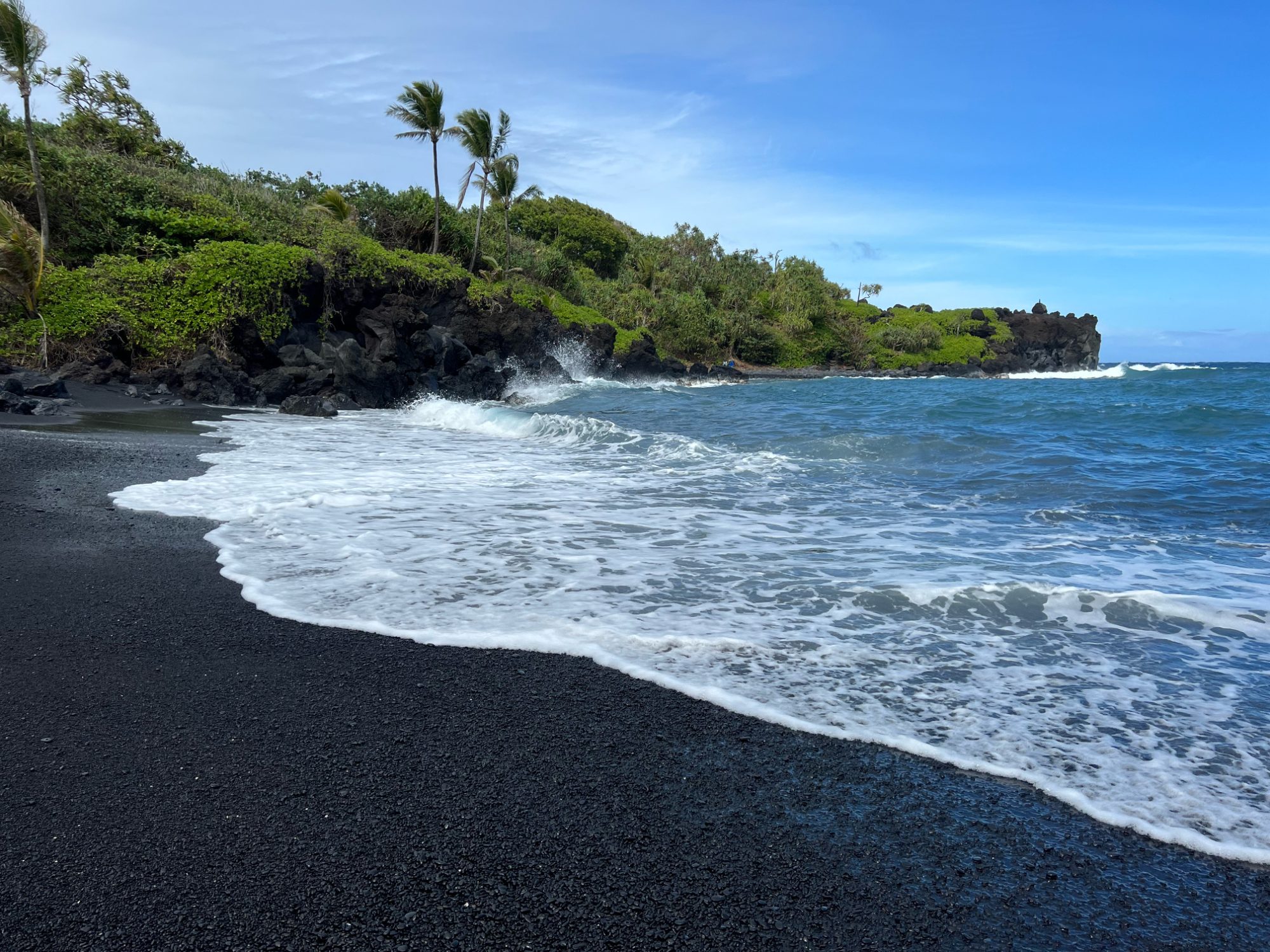
MM 32Waiʻanapanapa State Park
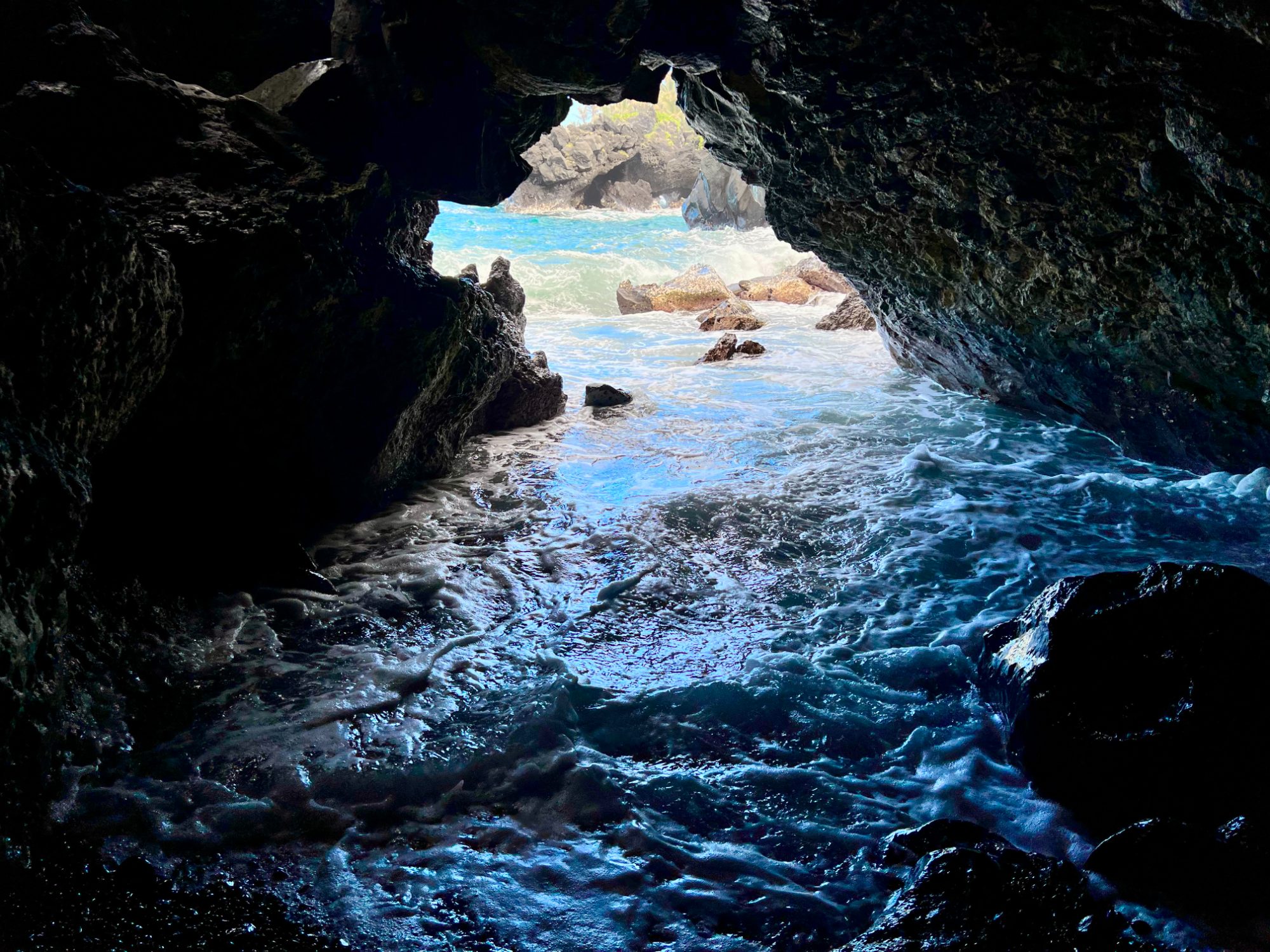
The showstopper: a jet-black volcanic-sand beach (Paʻiloa) framed by green cliffs and lava caves, with a blowhole, sea arch, and coastal trail. Advance reservations are required for out-of-state visitors and time slots sell out — book online before your trip. Don't skip this one.
Reserve ahead: Waiʻanapanapa entry and parking must be booked in advance at the Hawaiʻi State Parks site. Choose a mid-day slot that fits your pace up the highway.
The one you've seen on a postcard
MM 45Wailua Falls
An 80-foot roadside cascade just past Hana — one of the most photographed waterfalls on Maui, and among the most impressive for the least effort. Pull off safely and take it in.
Bamboo forest & a 400-foot waterfall
~MM 42, past HanaʻOheʻo Gulch & the Pipiwai Trail
Inside the Kīpahulu District of Haleakalā National Park, about 10 miles past Hana, the Pipiwai Trail is the best hike on the route: a 4-mile round trip through a towering bamboo forest and past jungle streams to the jaw-dropping 400-foot Waimoku Falls. Budget 2–3 hours for the full hike.
Should you drive it — or take a tour?
If you'd rather relax and let someone else handle the 600 curves, a guided small-group tour picks you up in West Maui and does the driving and narration. But the do-it-yourself version lets you linger where you like and skip the rest — our preference, as long as you start early and keep your stop list short. Either way, consider staying the night in Hāna for a slower, less rushed loop.
Drive respectfully. The Hāna Highway passes through living Hawaiian communities and private land. Don't trespass for waterfalls, don't block the one-lane bridges for photos, pull fully off the road at marked stops, and yield to local traffic — many residents drive this road every day. Leave every stop cleaner than you found it.
Frequently asked
Road to Hana from Kāʻanapali
How long does the Road to Hana take from Kāʻanapali?
Plan a full 10 to 12 hour day. It's about 1.5 hours from Kāʻanapali just to reach Pāʻia where the highway begins, then the drive to Hāna and back with stops fills the day. Leave by 6:30–7:00 a.m.
What are the best stops on the Road to Hana?
Twin Falls (mile marker 2), the Keʻanae Peninsula, Upper Waikani 'Three Bears' Falls (mile 19–20), Waiʻanapanapa black-sand beach (mile 32, reservation required), Wailua Falls (mile 45), and the Pipiwai Trail past Hāna. Choose three to five rather than all of them.
Do I need a reservation for Waiʻanapanapa State Park?
Yes. Out-of-state visitors must reserve entry and parking in advance through the Hawaiʻi State Parks website, and time slots sell out, so book before your trip.
Where do I get gas on the Road to Hana?
Fill up in Pāʻia before you start — it's the last reliable gas station for hours.